Serverless

Beyond APIs – How Agent-to-Agent Communication Protocols Enable Autonomous Business Networks

Beyond APIs – How Agent-to-Agent Communication Protocols Enable Autonomous Business Networks

In-Short

CaveatWisdom

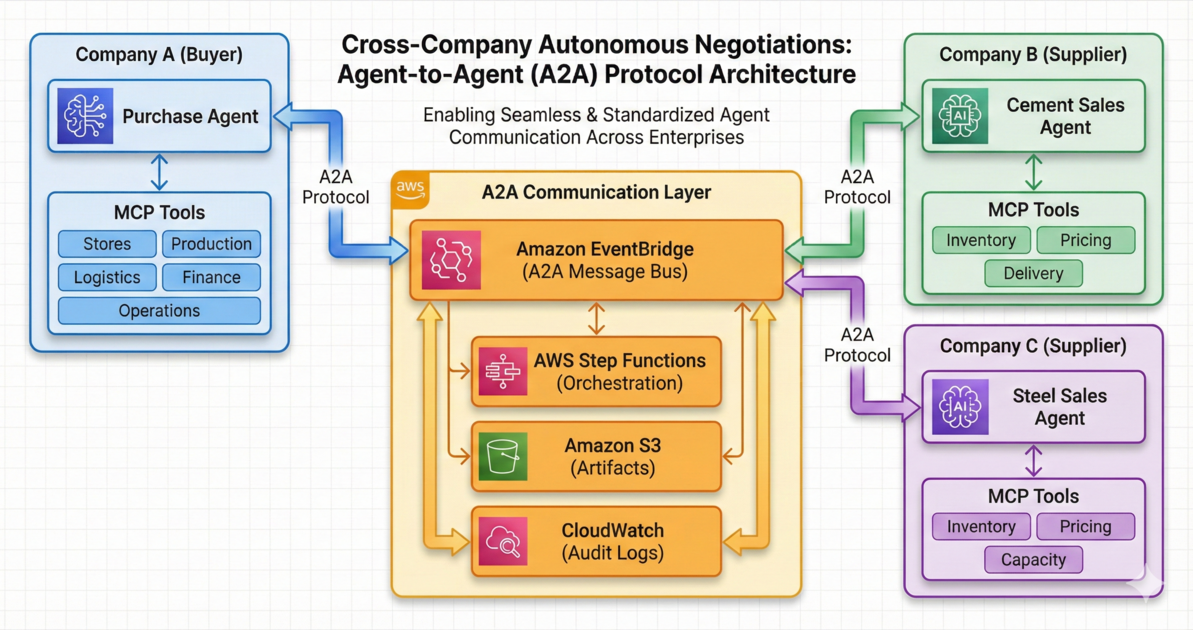
Caveat: In my previous post, we solved internal communication—your Purchase Agent talks to enterprise systems through MCP. But here’s the next challenge: your agent needs to negotiate with Supplier Agents from completely different companies. Traditional API integrations create tight coupling—every new supplier requires custom integration work, manual orchestration for multi-party negotiations, and brittle connections that break with every change. You can’t build autonomous business networks with custom APIs for each supplier.

Read More →
Enterprise Procurement Reimagined – How Agentic AI with MCP Tools Transforms B2B Negotiations

Enterprise Procurement Reimagined – How Agentic AI with MCP Tools Transforms B2B Negotiations

In-Short

CaveatWisdom

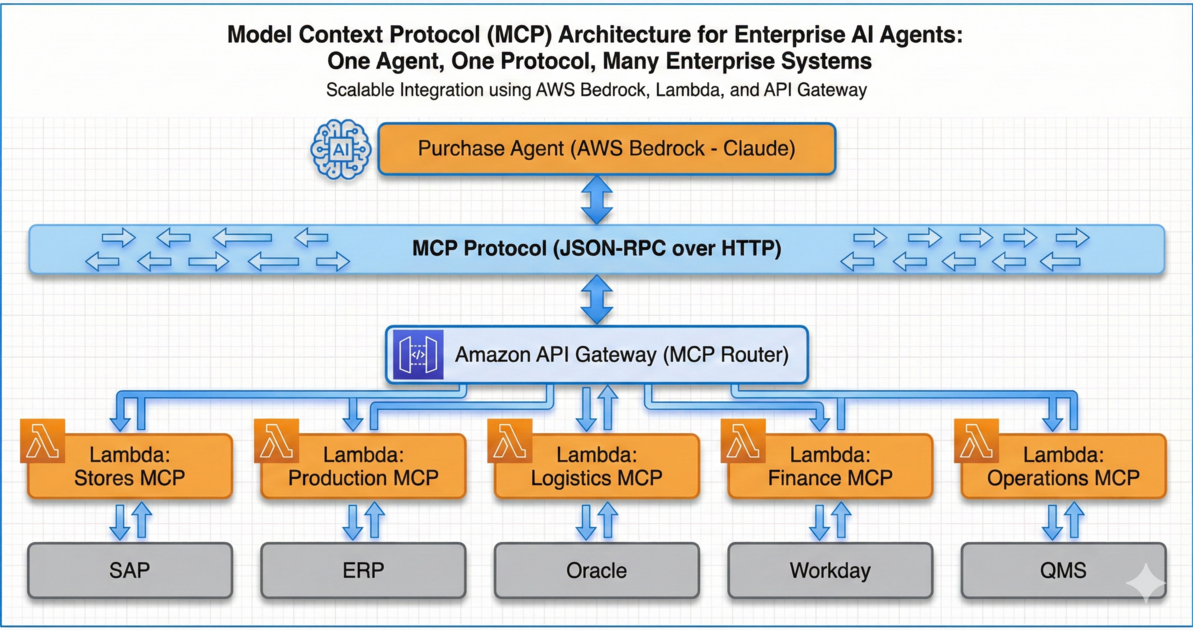
Caveat: Your AI procurement agent needs real-time data from Logistics, Production, Stores, Finance, and Operations to make informed decisions. But here’s the trap: each enterprise system speaks a different language with proprietary APIs. Without standardized tool protocols, you end up with brittle agents that have hard-coded integrations. Every API change breaks your agent. Every new system means weeks of custom development. Your agent makes suboptimal decisions because it can’t access complete enterprise data.

Read More →
Industrial Evolution – Helping Engineers to Slash Break-Down Maintenance Time with Gen AI

Industrial Evolution – Helping Engineers to Slash Break-Down Maintenance Time with Gen AI

In-Short

CaveatWisdom

Caveat: If root cause during a machine break-down maintenance is not identified with-in time and proper procedures to fix the problem safely is not followed in a challenging industrial environment then they can lead to lot of production loss and create safety concerns for maintenance personal.

Wisdom: Expert level understanding and huge experience in interpreting the problem in machines is required to troubleshoot and fix machines. By leveraging cutting edge Generative AI and IoT technologies which help in understanding root cause and fix problems, break-down maintenance time can be slashed from days to few hours.

Read More →
Understanding Industrial Protocols in the Perspective of IoT and Cloud

Understanding Industrial Protocols in the Perspective of IoT and Cloud

In-Short

CaveatWisdom

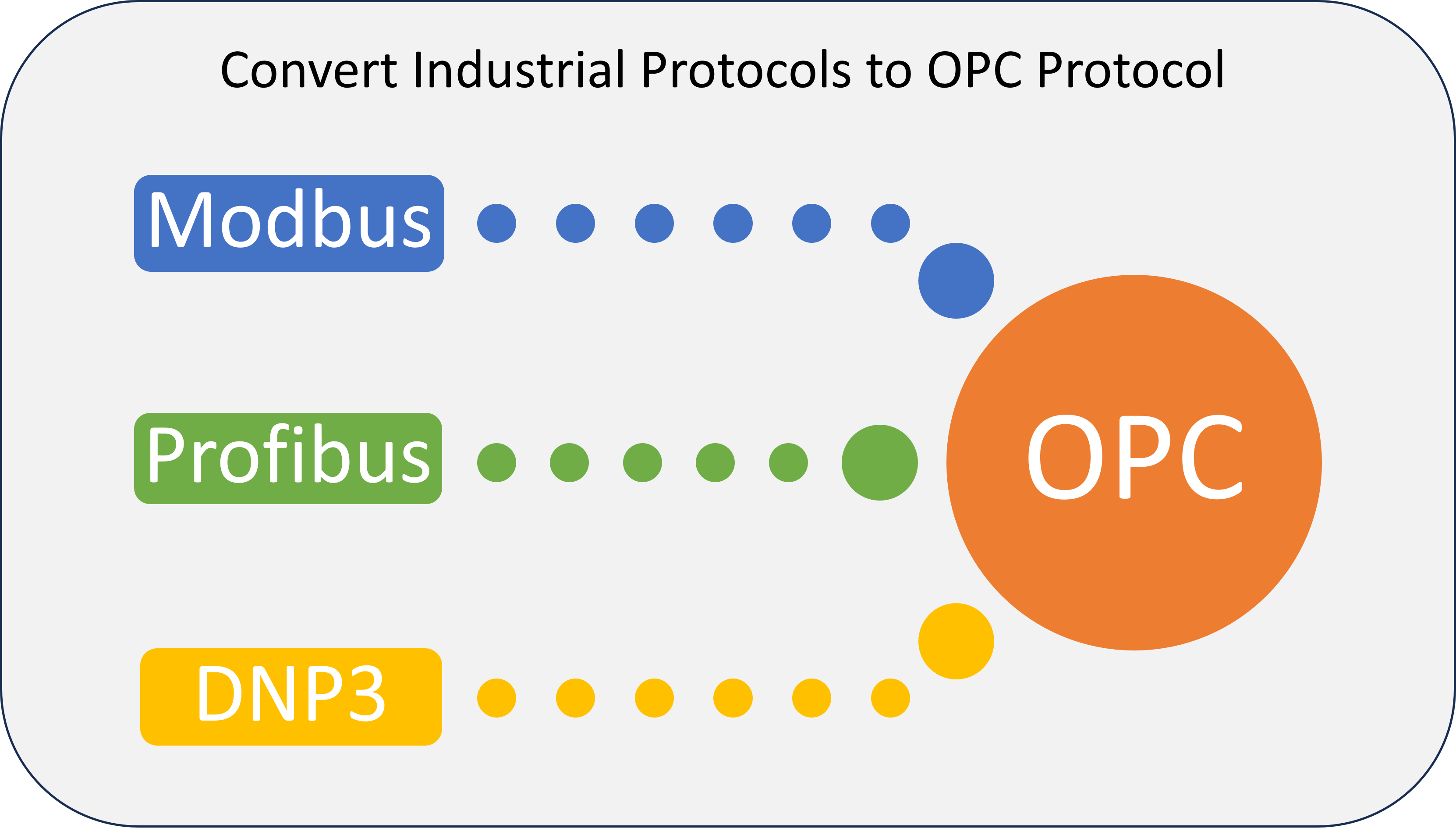
Caveat: To take advantage of latest technologies like Generative AI on Cloud, data is being ingested from different sources into the Cloud, coming to real-time industrial data, it’s important to understand the nature of data and it’s flow from its source on shop floor of the industry to its destination in the cloud.

Wisdom: To understand the nature of data and its flow, we need to understand the protocols involved at different levels of data flow, like Modbus, Profibus, EtherCAT, DNP3, OPC, MQTT, etc.

Read More →
Running Containers on AWS as per Business Requirements and Capabilities

Running Containers on AWS as per Business Requirements and Capabilities

We can run containers with EKS, ECS, Fargate, Lambda, App Runner, Lightsail, OpenShift or on just EC2 instances on AWS Cloud. In this post I will discuss on how to choose the AWS service based on our organization requirements and capabilities.

In-Short

CaveatWisdom

Caveat: Meeting the business objectives and goals can become difficult if we don’t choose the right service based on our requirements and capabilities.

Wisdom:

  1. Understand the complexity of your application based on how many microservices and how they interact with each other.
  2. Estimate how your application scales based on business.
  3. Analyse the skillset and capabilities of your team and how much time you can spend for administration and learning.
  4. Understand the policies and priorities of your organization in the long-term.

In-Detail

Read More →
Interweaving Purpose-Build Databases in the Microservices Architecture

Interweaving Purpose-Build Databases in the Microservices Architecture

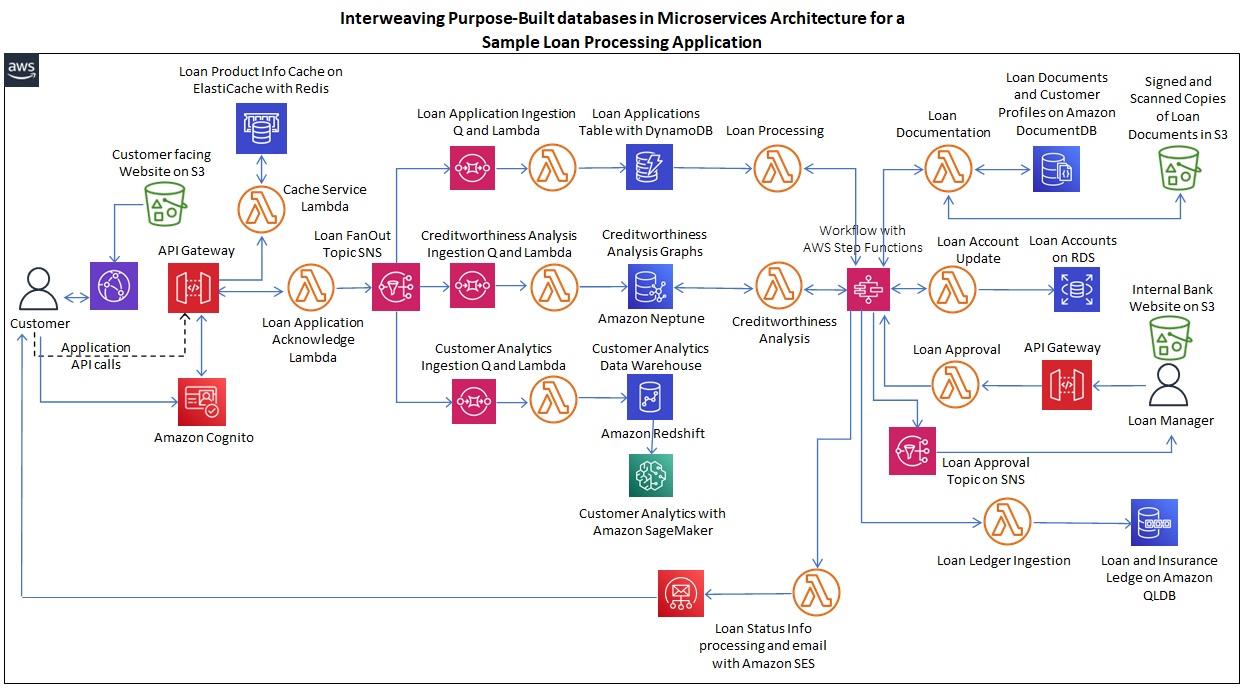
It is best practice to have a separate database for each microservice based on its purpose. In this post we will understand how to analyse the purpose based on a scenario and choose the right database.

In-Short

CaveatWisdom

Caveat: We can easily run into cost overruns if we do not choose the right database and design it properly based on the purpose of our application.

Wisdom:

  1. Understand the access patterns (Queries) which you make on our database.
  2. Understand how your database storage scales, will it be in terra bytes or petabytes.
  3. Analyse what is most important for your application among Consistency, Availability and Partition Tolerance.
  4. Choose Purpose-Built databases on AWS cloud based on Application Purpose.

In-Detail

Read More →

Query Lambda for RDS MySQL Private Database

Github link https://github.com/getramki/QueryLambda.git

It is important to create a database in private subnets in a VPC and not to expose it to internet, however it is challenging to connect to a private database instance and create the initial Schema and seed the database. This Query Lambda addresses this consern. This repo contains code for a Lambda function written in NodeJS and a SAM template to deploy it.

The Lambda function makes use of best practices of getting the secrets from Secrets Manager and using Layers for MySQL Package.

Read More →