
Containers

Deploying Agentic AI with MCP and A2A Capability on Amazon EKS

Deploying Agentic AI with MCP and A2A Capability on Amazon EKS

In-Short

CaveatWisdom

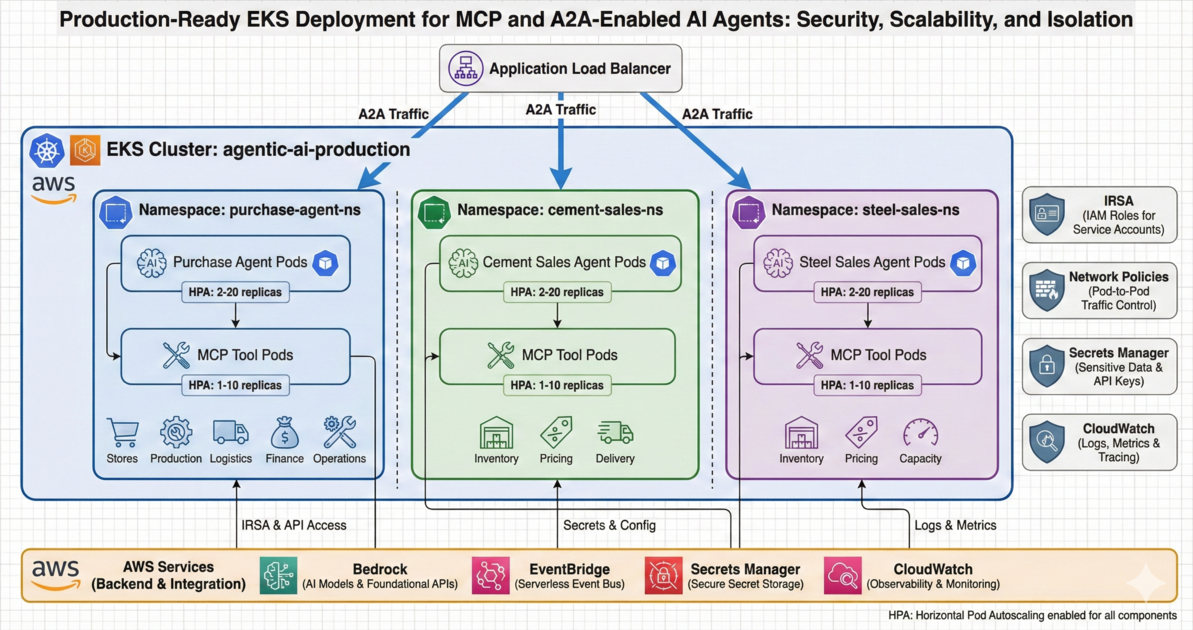
Caveat: You’ve built intelligent agents with MCP tools (Post 1) that communicate autonomously via A2A (Post 2). But deploying them without proper orchestration creates disasters: exposed credentials in containers, inability to handle load spikes when 500 RFQs hit simultaneously, no isolation between agents and MCP tools leading to security breaches, and operational nightmares with manual scaling. Ad-hoc deployments work in development but create security vulnerabilities and scalability bottlenecks in production.

Read More →
Running Containers on AWS as per Business Requirements and Capabilities

Running Containers on AWS as per Business Requirements and Capabilities

We can run containers with EKS, ECS, Fargate, Lambda, App Runner, Lightsail, OpenShift or on just EC2 instances on AWS Cloud. In this post I will discuss on how to choose the AWS service based on our organization requirements and capabilities.

In-Short

CaveatWisdom

Caveat: Meeting the business objectives and goals can become difficult if we don’t choose the right service based on our requirements and capabilities.

Wisdom:

  1. Understand the complexity of your application based on how many microservices and how they interact with each other.
  2. Estimate how your application scales based on business.
  3. Analyse the skillset and capabilities of your team and how much time you can spend for administration and learning.
  4. Understand the policies and priorities of your organization in the long-term.

In-Detail

Read More →

Build Docker Container for Java App and Deploying it on Amazon EKS

Github Link https://github.com/getramki/Deploy-JavaApp-On-EKS.git

This repo contains a Sample Spring Boot Java App with the dockerfile which uses Amazon Corretto 17 as base image and manifestes for creating an Amazon EKS cluster and deploying the sample app to the cluster as a container and exposing it with a service and classic load balancer.

Prerequisites

Docker, AWS Account and IAM user with necessary permissions for creating EKS Cluster, aws cli, configure IAM user with necessary programmatic permissions, eksctl cli, kubectl Please install and configure above before going further

Read More →
Planning and Managing Amazon VPC IP Space in an Amazon EKS Cluster

Planning and Managing Amazon VPC IP Space in an Amazon EKS Cluster

For the sake of simplicity, I will discuss only IPv4 addressing in this post, I will discuss IPv6 addressing in another blog post.

In-Short

CaveatWisdom

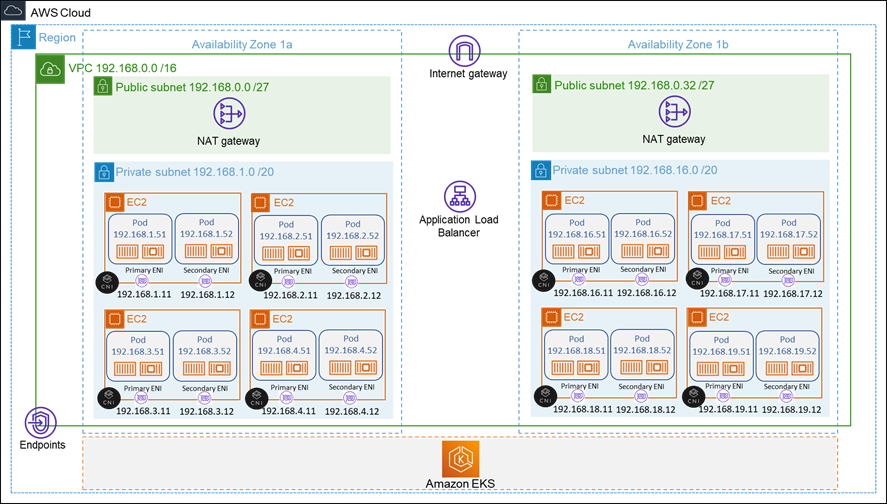
Caveat: Planning Amazon VPC IP space and choosing right EC2 instance type is important for Amazon EKS Cluster, or else, Kubernetes can stop creating or scaling pods for want of IP addresses in the cluster and our applications can stop scaling.

Wisdom:

  1. Create larger VPC with CIDR range like 10.0.0.0/16 and if needed add additional CIDR ranges to VPC with custom CNI networking
  2. Create Subnets with sufficient IPs and if needed use different subnet for secondary ENIs (network interfaces)
  3. Choose right type of instance which can support appropriate number of IPs
  4. Manage the IP allocation to Pods and creation of ENIs

In-Detail

Read More →